Vorasidenib
My tumor has IDH1 R132C. That is why IDH inhibition matters here. Vorasidenib is FDA-approved for grade 2 astrocytoma or oligodendroglioma with a susceptible IDH1 or IDH2 mutation after surgery, and it is the IDH inhibitor I am on now.
The mutations that define it are IDH1, ATRX, and TP53. A peptide pipeline took 314,801 candidates down to 18. This page walks through all of it in plain language, and where a number came from, I say so.
What I am trying to do is go after the tumor in two different ways: use an FDA-approved IDH inhibitor for the mutation that defines my cancer, and explore a personalized vaccine that tries to make selected tumor mutations visible to my immune system. This is my treatment story, not proof that the vaccine, or the combination, improves outcomes.
My tumor has IDH1 R132C. That is why IDH inhibition matters here. Vorasidenib is FDA-approved for grade 2 astrocytoma or oligodendroglioma with a susceptible IDH1 or IDH2 mutation after surgery, and it is the IDH inhibitor I am on now.
The vaccine is built from my tumor's own mutations, so it only exists for me. Nobody knows yet whether it helps, and nobody knows whether pairing it with the IDH drug helps — both are still experiments. It's made of peptides that cross the mutated spots, the idea being to point my T cells at fragments of protein that shouldn't be in a healthy body.
This isn't a tidy conclusion. It's the case laid open: what got measured, what I computed myself, what's public on this page, and what you'd have to email me for.
Diagnosis, surgery, surveillance, treatment starts, vaccine milestones, and the life around all of it.
OverviewDiagnosis, IDH inhibitor context, somatic calls, peptide funnel counts, TMB/MSI, purity, and PGx coverage.
Vaccine funnelHow my tumor mutations became a computational peptide list, then a smaller vaccine-design shortlist.
Variant atlasIDH1, ATRX, TP53 / Li-Fraumeni context, MGMT methylation, HLA type, and vaccine-relevant peptides.
Raw accessRaw genome, tumor VCF, peptide-level files, and source reports need privacy boundaries and version notes.
Some of these come straight off my medical reports. Others are first-pass counts from code I wrote to make sense of the raw files. I've marked which is which.
I worked with a pipeline that starts with mutations in my tumor and narrows them down to peptides most likely to be visible to my immune system. Those peptides then become the starting point for a personalized vaccine.
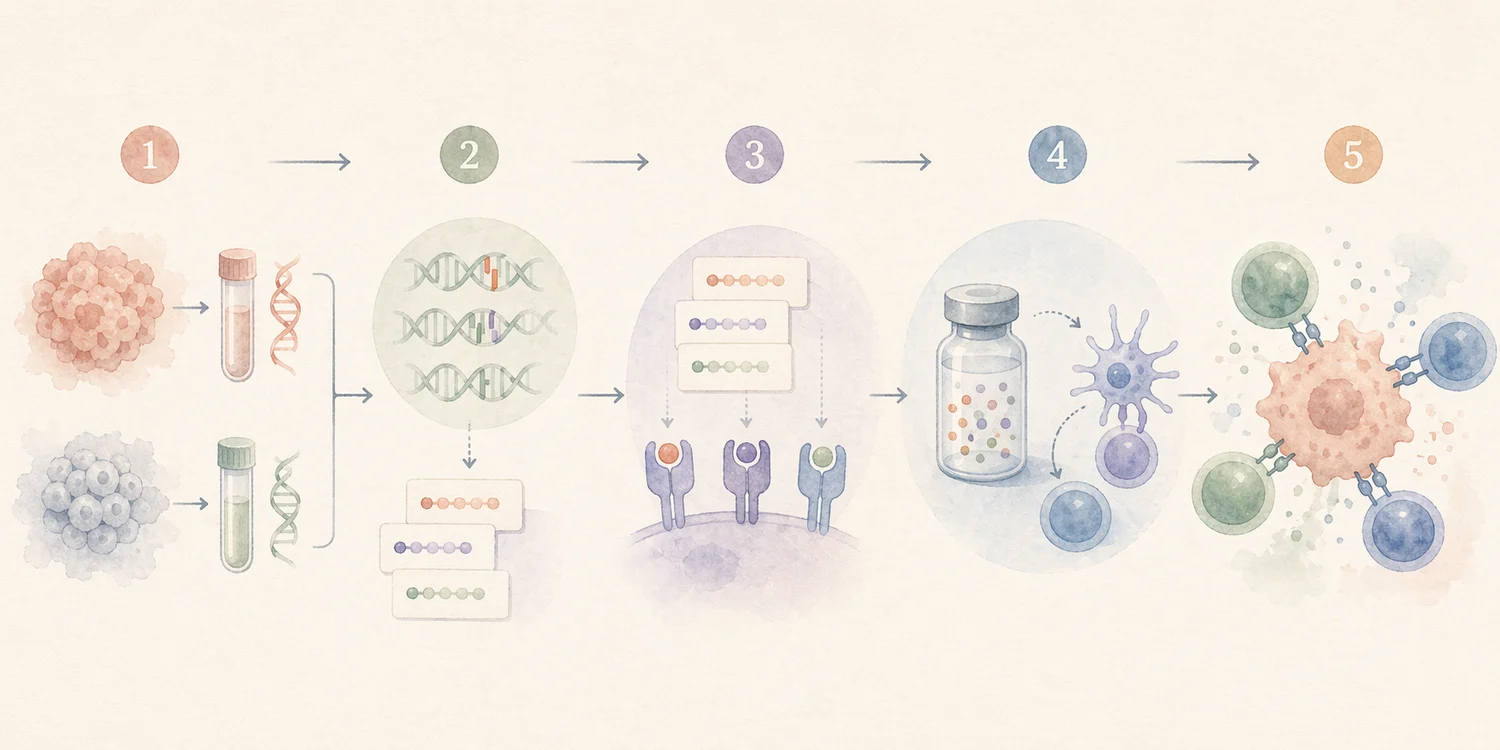
Find mutations that are present in the cancer and different from normal tissue.
Look for mutation-spanning peptides that could be shown by my HLA molecules.
Use selected peptides as patient-specific vaccine material.
The goal is for immune cells to recognize selected pieces of the tumor.
Start with tumor sequencing and look for mutation-spanning peptides that should look different from normal self.
CeGAT's vaccine is personalized rather than off-the-shelf: the input is my tumor's molecular profile.
The point is to help T cells recognize a patient-specific tumor profile, using peptides selected from the tumor's own mutations.
These are the findings that actually matter — the drivers, the immune-presentation details, the peptides — pulled from my Tempus, BostonGene, and pathology reports. Click any one to see what it means and how confident I am about it.
If this story makes you want to help, these are established places to support brain tumor research, patient programs, and translational work.
Research funding, patient education, and support for people facing brain tumors.
National advocacyResearch, policy work, and patient-centered advocacy across brain tumor types.
Academic centerClinical and translational brain tumor research at UCSF.
Translational researchEarly-phase research and trials focused on brain tumor treatment.
Research nonprofitResearch support focused on glioblastoma and aggressive brain tumors.
Research foundationFunding and programs for brain cancer research and early-career investigators.
The next chapter is the tool that grew out of this analysis, with the doctor kept firmly in the loop.